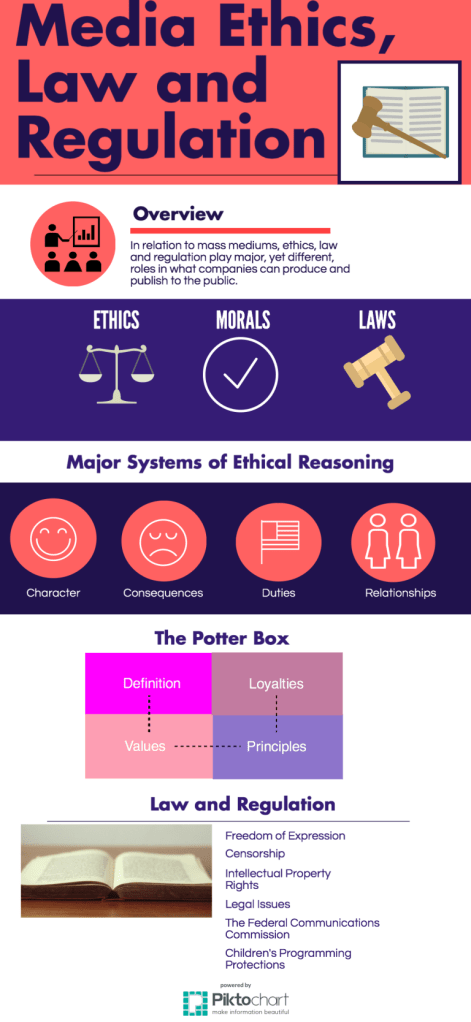
This post will cover some facts about Digital Law and Ethics, concisely summarizing the topic using an infographic, video and a timeline tracing back the origins of ethics. Following those I’ll provide some insight regarding some aspects of Digital Law and Ethics.
The History of Ethics
Following is a comprehensive timeline of historic dates in the history of Ethics:
500 BC — Hippocrates – Hippocratic Oath — physicians must promise to practice ethical medicine.
129-217 AD –Galen, a Roman physician, philosopher and medical researcher, wrote That the Best Physician is also a Philosopher, proposing the importance of combining medicine and philosophy.
800 AD — Ishaq bin Ali Rahawi, a Muslim physician, wrote the Adab al-Tabib (Conduct of a Physician), the first treatise dedicated to medical ethics.
1400s – 1600s — Renaissance — Recover of ancient Greek medical texts begins process of re-evaluation of ethics of medicine
1500s — Paracelsus, a physician during the Renaissance, re-envisions medicine.
1610 Galileo first proposes his support of the heliocentric worldview. He later recants his proposal due to pressure by the Roman Catholic Church.
1700s – 1840s “Medical treatment (in England), and the medical response to illness, centered on the individual patient, and did not extend from the individual to the implications for society at large.”
1753 — James Lind, a Scottish surgeon for the Royal Navy, writes A Treatise on the Scurvy.
1779 — Johann Peter Frank, a German physician, writes strict ethical guidelines for public health and sanitation to improve the quality of life.
1794 — Sir Thomas Percival an English physician, writes first modern code of medical ethics
1822 — Louis Pasteur born Dec. 27 in Dole, France. (d. September 28, 1895) — Pasteur is perhaps the best-known scientist of the 19th century. His germ theory of disease is the foundation of modern medicine and public health.
1830 — Charles Babbage writes the book Reflections on the Decline of Science in England. This was one of books to catalog scientific misdeeds. Originated such terms as data trimming, data fudging, data falsification, and data cooking.
1847 — American Medical Association adopts first code of ethics
1848 — (13 October 1821 – 05 September 1902) German physician Rudolf (Carl) Virchow, later famed for cell theory, founds the medical journal Medical Reform (Medicinische Reform), and writes “Report on the Typhus Epidemic in Upper Silesia.”
1854 — John Snow, the doctor who broke the Boad Street pump and took direct action against the spread of cholera through polluted drinking water.
1856 — Gregor Mendel, commonly known as “the father of genetics’, began his studies on the reproduction on pea plants.
1900 — Alice Hamilton, MD, begins studies of “occupational disease” among workers poisoned in the lead trades.
1927 — The term “bioethics” is first coined by Fritz Jahr.
1932-1972- The Tuskegee Syphilis Experiments were conducted by the US Public Health Service. Unethical treatment was given to the participants as information and possible treatments were denied.
1939 — The United States begin the Manhattan Project to develop an atomic bomb. This was done after rumors that Nazi Germany was trying to purify uranium to create their own fission bomb. This event is thought to have launch the age of nuclear weapons.
1944 — Josef Mengele performs gruesome human experiments in the Nazi concentration camp of Auschwitz.
1947 — Aldo Leopold, and American ecologist, publishes The Land Ethic – “dealing with man’s relation to land and to the animals and plants which grow upon it”
1947 — Judges of the Numbering Trials create the Nuremberg Code. They used it as a set of research principles to be used to prosecute the Nazi scientists as war criminals.
1948 — Declaration of Geneva — World Medical Association modern re-statement of the Hippocratic Oath, noting in part the duty of physicians to serve the humanitarian goals of medicine. One part declares: “I will retain the utmost respect for life, even under threat..”
1947 – 1991 — The United States is involved the testing of radiation on unsuspecting human subjects. This led to the Advisory Committee on Human Radiation Experiments to be formed in 1994.
1955 – Jonas Salk discovers a cure for polio, which was a leading cause of death at this time. Instead of patenting the vaccine, Salk gives it away for free to anyone who needs it. When ask who owned the patent, he stated, “There is no patent. Could you patent the sun?”
1959 — Henry Knowles Beecher (1904 — 1976), an American scientist, writes “Experimentation in Man” for JAMA, detailed ethical codes in medical research to date and advocated informed consent and the use of placebos in control subjects for clinical trials.
1960s — Joseph Fletcher (1905 – 1991), American professor founds theory of situational ethics in the 1960s, pioneer in the field of bioethics. Fletcher was a leading academic exploring the topics of abortion, infanticide, euthanasia, eugenics, and cloning.
1961–The Milgram Experiment was conducted to test how far a subject would go to earn approval of an authority figure. The experiment was thought to violate many ethical standards due to extenuating emotional conflict and stress.
1964 — Declaration of Helsinki — World Medical Association agrees on a code of research ethics; most journal editors required that research be performed in accordance with the Declaration. The declaration led to the Institutional Review Board (IRB) process.
1970– Van Rensselaer Potter, an American biochemist, suggests broader meaning for bioethics, including biosphere, a “global ethics,” a discipline representing a link between biology, ecology, medicine and human values.
1971 — Stanford Prison Experiment — college students acted as prison guards or prisoners in a mock prison setting. The rash behavior of the guards raised ethical questions and caused the experiment to end after only 6 days.
1970s –The growing influence of ethics in contemporary medicine can be seen in the increasing use of Institutional Review Boards to evaluate experiments on human subjects, the establishment of hospital ethics committees, the expansion of the role of clinician ethicists, and the integration of ethics into many medical school curricula.
1975– The Asilomar Conference on Recombinant DNA, organized by Paul Berg, proposes ethical guidelines for biotechnology uses and safety.
1978–The International Committee of Medical Journal Editors (ICMJE) is formed. It consists of a group of medical journal editors who create and each year revise Uniform Requirements for Manuscripts.
1979–The Belmont Report was drafted by the Dept. of Health, Education and Welfare in response to the Tuskegee Experiments. It reports the ethical guidelines to be used when human subjects are involved in research.
1980s — Universities establish human subjects review committees.
1980s – 1990s — Variety of bioethics journals established.
1982 — William Broad and Nicholas Wade publish Betrayers of the Truth: Fraud and Deceit in the Halls of Science. This book helps to reveal much of the scientific misconduct that was going on at the time.
1992 — The Office of Research Integrity is formed.
1996 — Turnitin.com was created. Large undergraduate classes at UC Berkely inspired the creation of the website, which aims to prevent duplicate research papers being handed in.
1997–COPE, [The Committee On Publication Ethics] was established in the UK. Its members consist of academic journal editors and others who are concerned about the integrity of what is peer-reviewed and published in journals.
2000s — Unified approach to medical ethics.
2004– eTBLAST was established. eTBLAST is a search engine designed to search similar texts within the MEDLINE database. It has led to research involving plagiarism and duplicate publications of articles in academic journals. Pairs of similar texts are store in the Deja Vu database.
2005 — United Nations Universal Declaration on Bioethics and Human Rights
2008 — Study on possible plagiarism and duplications using eTBLAST and Deja Vu publishes results.
 Simon's Approach to Digital Law and Ethics